
Table of Contents
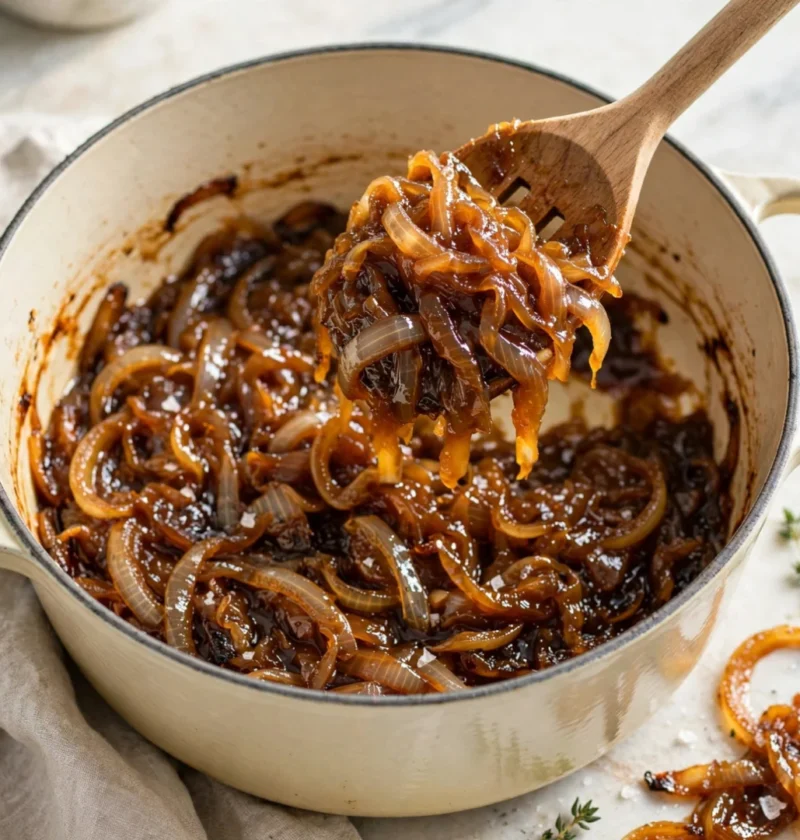
Caramelized onions are a culinary treasure, transforming simple ingredients into a sweet and savory delight that elevates any dish. Whether you’re looking to enhance a burger, add depth to a pasta, or create a rich flavor base for soups, knowing how to caramelize onions is an essential skill every home cook should possess.
With their golden hue and rich flavor profile, caramelized onions can turn everyday meals into gourmet experiences. Their versatility makes them a must-try for anyone who loves to cook, and once you taste the difference they make, you’ll find yourself incorporating them into countless meals. The magic of caramelized onions lies in their ability to transform dishes from ordinary to extraordinary, adding layers of flavor that are both comforting and complex.
Why You’ll Love This Caramelized Onions Recipe
- Simple and quick prep time with minimal ingredients, making it accessible for novice cooks. You can achieve gourmet results without complicated techniques.
- Versatile usage: perfect for enhancing burgers, dips, salads, and more culinary creations. They also pair wonderfully with meats, cheeses, and vegetables.
- Enhances the flavor profile of both sweet and savory dishes, complementing a wide variety of foods. Imagine adding them to a savory quiche or a sweet tart, and you’ll see their true potential.
- Ideal for meal prep; they store well for future use, allowing you to add gourmet flair to any meal in minutes. Have a batch ready in your fridge, and you’re just moments away from a delicious enhancement.
- Easy to customize based on personal taste preferences, whether you enjoy them sweeter or with a hint of acidity. You can balance the sweetness with acidity through the use of balsamic vinegar or even a squeeze of lemon.
Ingredients
- For the caramelized onions:
- 4 large onions (yellow or sweet onions are best for caramelizing, as they contain more sugars that promote browning; red onions can be used for a slightly different flavor profile)
- 2 tablespoons olive oil (extra virgin olive oil adds a rich flavor; feel free to use a lighter oil if preferred, but avoid oils with strong flavors that may overpower the onions)
- 1 tablespoon unsalted butter (for a creamy texture and flavor; if you’re seeking a dairy-free option, you can replace it with more olive oil)
- 1 teaspoon salt (to draw out moisture and enhance flavor; kosher salt works well here for its texture)
- 1 teaspoon sugar (optional, enhances sweetness and accelerates browning; brown sugar can also be substituted for a deeper flavor)
- 1 tablespoon balsamic vinegar (optional, for depth of flavor and a hint of acidity; you can also try apple cider vinegar for a fruity twist)
Note: For the best results, choose high-quality onions, as they will directly influence the flavor of your caramelized onions. Yellow onions are commonly preferred, but sweet onions like Vidalia can offer an extra layer of sweetness. Furthermore, the type of fat you use can also alter the flavor; consider using a combination of oils for different taste profiles. Remember that fresh, ripe onions will always yield better results than older, less vibrant ones. You can learn more about this topic.
Steps / Instructions
Prepare the onions: Peel the onions and slice them thinly (about 1/8 inch thick). Uniform slices help ensure even cooking and caramelization. The thinner the slice, the more evenly they will cook down; this is crucial for achieving that perfect melt-in-your-mouth texture.
Heat the pan: In a large skillet, heat olive oil and butter over medium heat until the butter melts and starts to foam, creating a beautiful base for your onions. This foaming action indicates that the oil is hot enough to start cooking.
Add the onions: Carefully add the sliced onions to the pan. Stir them gently to coat with the oil and butter, ensuring all pieces are well-coated for even caramelization. If the pan doesn’t hold all the onions comfortably, consider caramelizing in batches.
Season: Sprinkle the salt and sugar (if using) over the onions. The salt helps draw out moisture, while sugar enhances caramelization, contributing to a lovely golden-brown color. The balance of salt and sugar is what helps create that wonderful deep flavor.
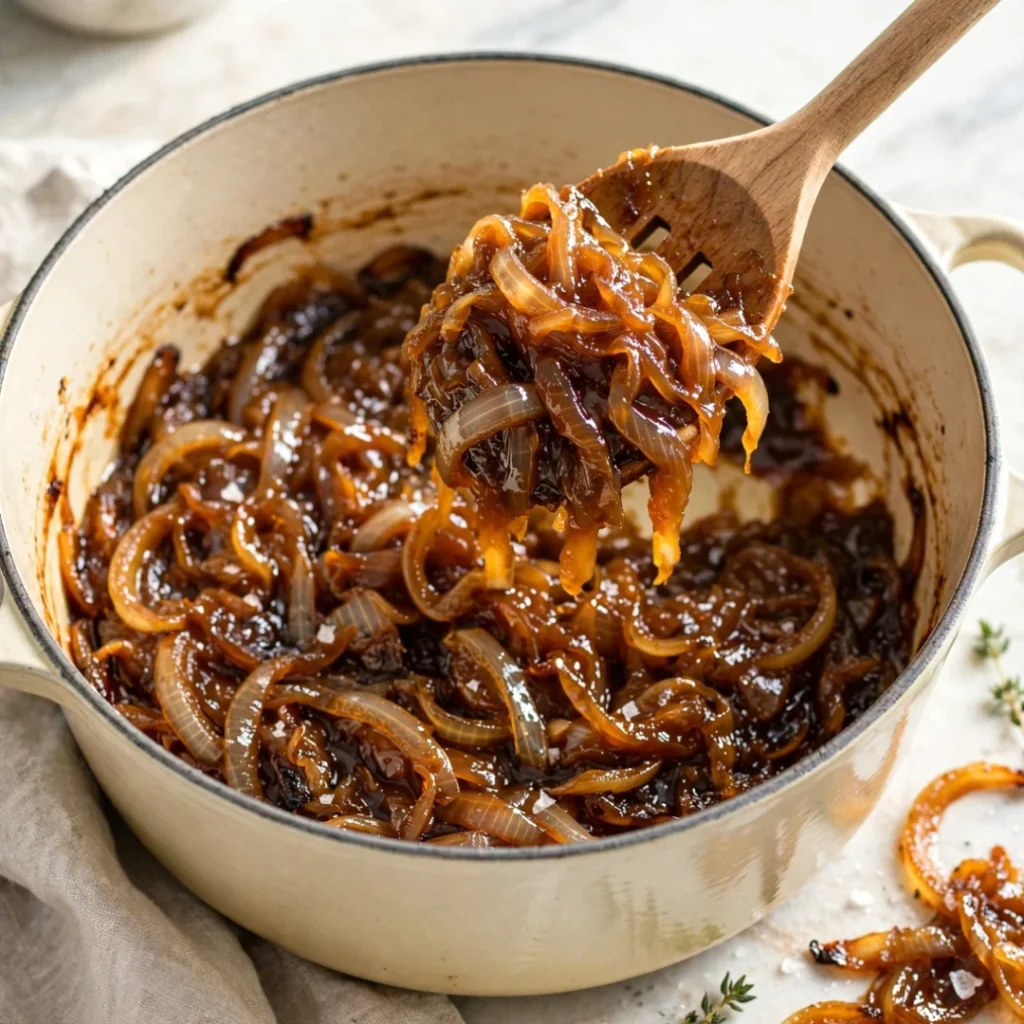
Cook low and slow: Reduce the heat to medium-low and cook the onions, stirring occasionally. This process will take about 30 to 40 minutes. You’re aiming for a beautiful golden brown color, which indicates the sugars are caramelizing properly; don’t rush this step, as good caramelization takes time.
Add balsamic vinegar (optional): If you wish to deepen the flavor, add balsamic vinegar during the last 5 minutes of cooking. Stir well and allow it to cook down slightly, creating a rich glaze that clings to the onions. This addition will enhance the overall complexity of the dish.
Check for doneness: The onions should be soft, caramelized, and have a rich, sweet aroma. They should be deeply golden brown, not burnt, which can happen if the heat is too high. If they start to stick to the pan, add a splash of water to deglaze and loosen them up.
Cool and store: Once done, remove the skillet from heat and let the onions cool. Use them immediately or store them in an airtight container in the fridge for up to a week, ensuring you have this delightful ingredient ready for various meals. For longer storage, consider freezing them in portions for easy future use.
Tips & Tricks
- Low and slow is key: Patience is crucial when caramelizing onions. Cooking them too quickly over high heat can lead to burnt onions instead of perfectly caramelized ones. Enjoy the process and don’t rush! This is a labor of love that truly pays off with flavor.
- Use a heavy-bottomed skillet: A good-quality skillet ensures even heat distribution and prevents sticking. Cast iron or stainless steel pans work exceptionally well for this task, allowing for better caramelization.
- Don’t rush: Stir occasionally but allow the onions to develop their color slowly. This slow cooking allows the natural sugars to caramelize beautifully, resulting in a rich flavor. It’s a great time to enjoy the aromas filling your kitchen!
- Storage: Caramelized onions can be frozen in an airtight container for up to three months. Simply thaw and reheat when needed. They also make a great addition to soups or sauces, providing instant flavor without extra effort.
- Experiment with flavors: Add herbs like thyme or rosemary during cooking for an aromatic twist. You can also consider incorporating spices like paprika or even a splash of wine for a unique flavor profile that can elevate your caramelized onions even further.
Conclusion
Caramelized onions are not just a delicious addition; they’re a transformative element in many dishes. From simple appetizers to complex entrees, mastering this technique will allow you to elevate your cooking and impress your guests. Whether you’re mixing them into a savory onion dip or layering them in a caramelized onion and cheese tart, these sweet and savory gems are sure to delight. Enjoy the process, and don’t forget to experiment with different flavors! Check out our related guide for more tips.
Now that you know how to caramelize onions, it’s time to get cooking! Share your experiences in the comments, or let us know how you used your caramelized onions in your favorite dishes. Don’t forget to save this recipe for later and share it with your friends who love to cook! Whether it’s a family gathering or a quiet dinner at home, your caramelized onions can add a gourmet touch to any meal. Each batch can be a new adventure in flavor, so get creative!
Caramelized Onions Recipe
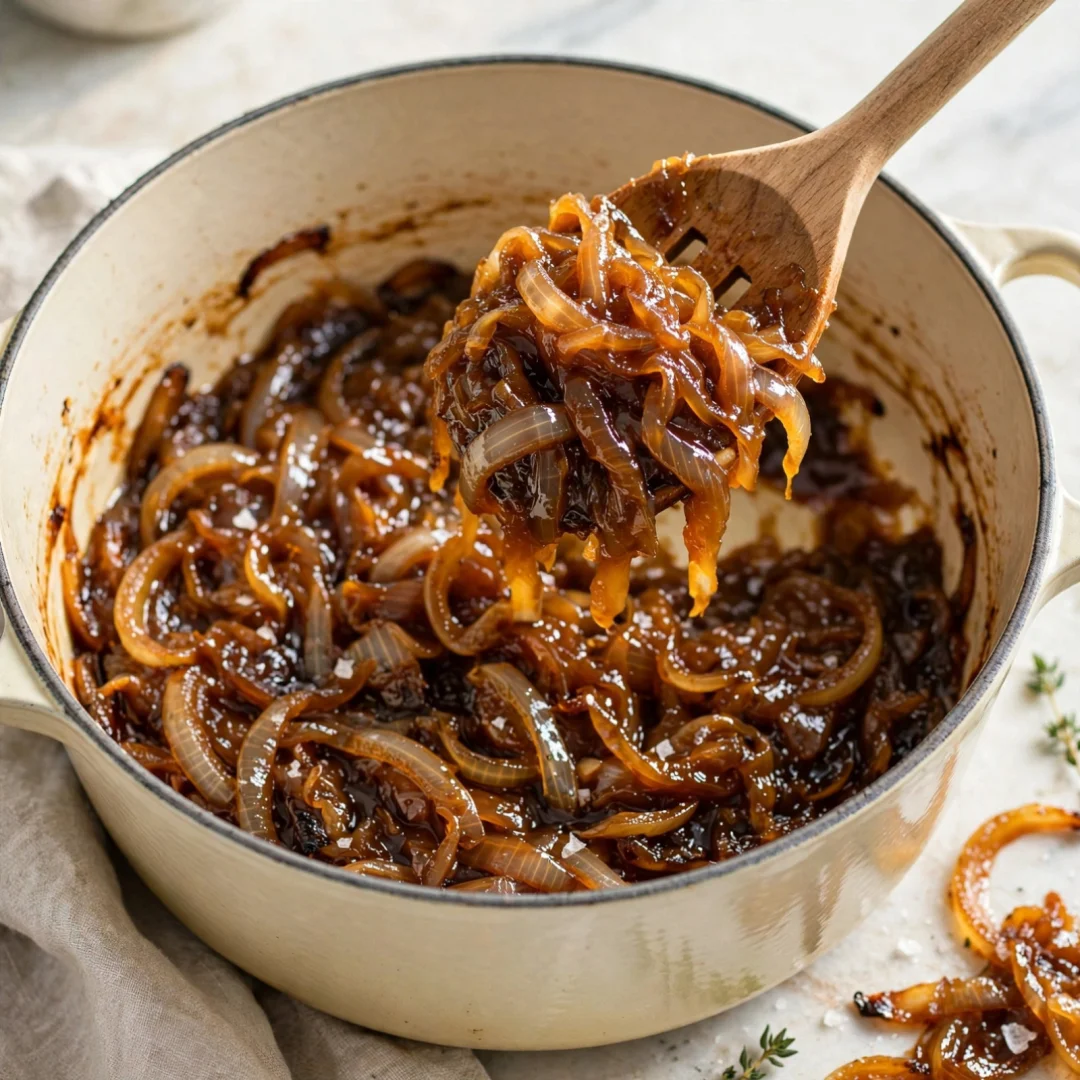
Caramelized onions are a culinary treasure, transforming simple ingredients into a sweet and savory delight that elevates any dish.
Ingredients
- 4 large onions (yellow or sweet onions are best)
- 2 tablespoons olive oil
- 1 tablespoon unsalted butter
- 1 teaspoon salt
- 1 teaspoon sugar (optional)
- 1 tablespoon balsamic vinegar (optional)
Directions
Peel the onions and slice them thinly (about 1/8 inch thick).
In a large skillet, heat olive oil and butter over medium heat until the butter melts and starts to foam.
Carefully add the sliced onions to the pan. Stir them gently to coat with the oil and butter.
Sprinkle the salt and sugar (if using) over the onions.
Reduce the heat to medium-low and cook the onions, stirring occasionally for about 30 to 40 minutes.
If desired, add balsamic vinegar during the last 5 minutes of cooking.
Check for doneness; the onions should be soft, caramelized, and deeply golden brown.
Remove the skillet from heat and let the onions cool.
Recipe Reviews
- ★★★★★
Excellent recipe!
Leave a Reply
Your email address will not be published. Required fields are marked *
Excellent recipe!