
Table of Contents
Savory Crepes Recipe – Easy French Breakfast or Brunch
There’s something undeniably magical about watching a thin, golden crepe sizzle in the pan, then folding it around a warm, savory filling that oozes with cheese, ham, or sautéed vegetables. The first bite delivers a delicate crispness at the edges, a tender, almost custard‑like interior, and a burst of flavor that feels both familiar and excitingly French. Whether you’re serving them for a lazy weekend breakfast, a festive brunch with friends, or a quick weeknight dinner that feels like a treat, savory crepes are the kind of dish that turns an ordinary meal into a moment worth savoring.
What makes savory crepes so appealing is their incredible versatility. The same simple batter can become a vehicle for everything from classic ham‑and‑cheese to earthy mushroom‑and‑spinach, from bright tomato‑and‑basil to hearty bacon‑and‑egg. They’re quick to whip up, endlessly adaptable, and—best of all—feel indulgent without requiring hours in the kitchen. If you’ve ever wanted to bring a touch of the Parisian café to your own table without the fuss of pastry dough or complicated sauces, this recipe is your golden ticket.
Below you’ll find a complete guide to making savory crepes at home, from mixing the batter to choosing the perfect fillings, with plenty of tips to ensure your crepes turn out tender, pliable, and ready to hold whatever deliciousness you decide to tuck inside. Whether you’re a seasoned crepe‑maker or trying your hand at this French classic for the first time, you’ll find everything you need to create a breakfast or brunch spread that’s sure to impress.
Why You’ll Love This Recipe
Savory crepes check all the boxes for a recipe that feels special yet stays wonderfully approachable. Here’s what makes them a standout choice for any meal:
- Speed and simplicity – The batter comes together in minutes, and each crepe cooks in under two minutes. You can have a stack ready before your coffee finishes brewing.
- Endless filling options – From classic ham and Swiss to sautéed greens and goat cheese, the flavor possibilities are limited only by what’s in your fridge.
- Make‑ahead friendly – The batter can be prepared hours (or even a day) ahead, and cooked crepes store beautifully for quick reheating.
- Crowd‑pleasing versatility – Serve them stacked on a platter for a brunch bar, rolled individually for grab‑and‑go snacks, or folded into neat packets for a plated dinner.
- Naturally adaptable – Gluten‑free flour, dairy‑free milk, and egg substitutes all work well, making it easy to tweak the recipe to fit dietary needs.
- Balanced indulgence – While they feel indulgent, savory crepes can be lightened up with plenty of vegetables, lean proteins, and modest amounts of cheese.
- Fun to eat – There’s something inherently satisfying about picking up a warm, filled crepe and taking that first bite—the combination of textures and flavors is hard to beat.
If you love recipes that deliver big flavor with minimal stress, savory crepes are destined to become a regular in your breakfast and brunch rotation.
Ingredients
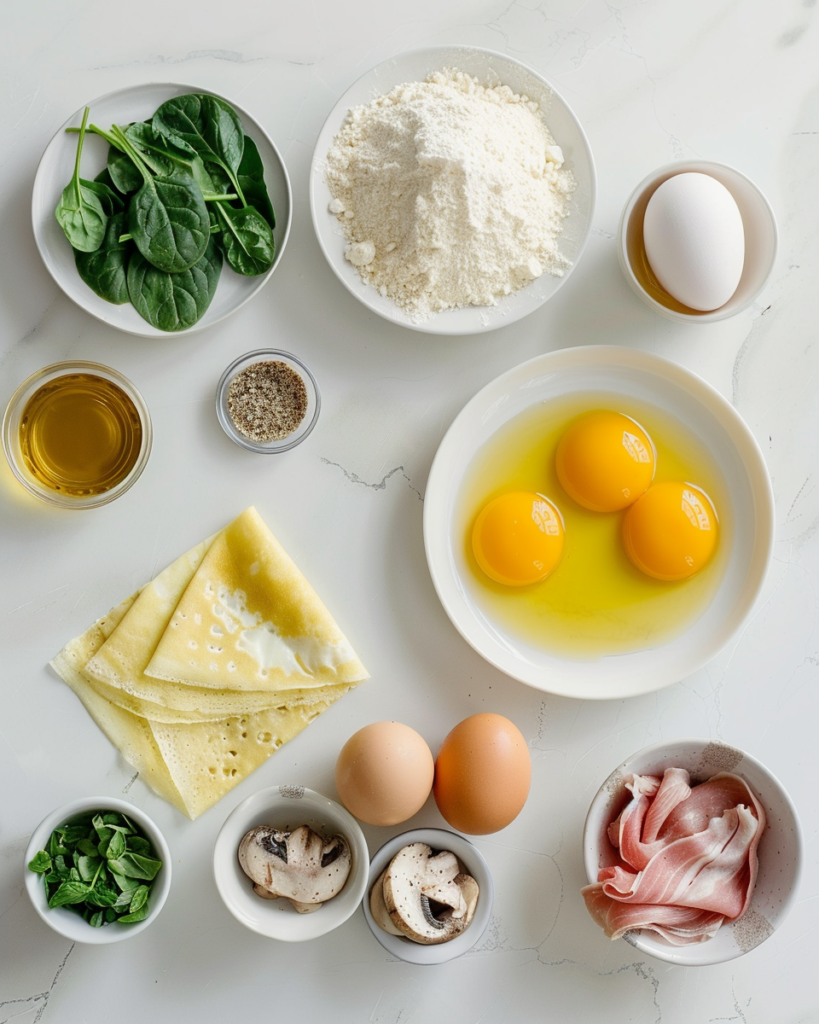
The beauty of savory crepes lies in their simplicity. A handful of pantry staples creates a batter that’s thin, smooth, and ready to fill with anything you crave. Below is a basic batter that yields about 12‑15 medium crepes (enough for 4‑6 servings, depending on filling). Feel free to scale up or down as needed.
| Ingredient | Amount | Notes |
|---|---|---|
| All‑purpose flour | 1 cup (120 g) | For a gluten‑free version, use a 1:1 gluten‑free blend or buckwheat flour for a traditional galette twist . |
| Salt | ¼ teaspoon | Enhances flavor; kosher or fine sea salt works best . |
| Large eggs | 2‑3 | Provides structure and richness; 2 eggs yields a lighter crepe, 3 gives a slightly richer bite . |
| Milk | 1 cup (240 ml) | Whole milk gives the tenderest results; you can substitute part or all with water for a lighter batter, or use plant‑based milk (almond, oat, soy) for a dairy‑free option . |
| Water | ¼ cup (60 ml) | Helps thin the batter to the perfect pour‑consistency; some recipes omit it and use only milk, but the water‑milk combo creates exceptionally thin crepes . |
| Melted butter | 2‑3 tablespoons | Adds flavor and helps prevent sticking; you can also use olive oil or melted coconut oil for a different note . |
| Optional: sugar | ½‑1 teaspoon | A tiny amount balances the batter for savory crepes; omit if you prefer a completely neutral base . |
| Butter or oil | For the pan | Used to grease the skillet between crepes; a neutral oil (canola, vegetable) works well if you want to avoid butter flavor . |
Filling Ideas (choose one or mix and match)
- Classic ham and cheese – Thinly sliced ham (or turkey ham) and shredded Gruyère, Swiss, or cheddar.
- Spinach and feta – Sautéed fresh spinach with garlic, crumbled feta, and a pinch of nutmeg.
- Mushroom and thyme – Cremini or shiitake mushrooms sautéed with shallots, thyme, and a splash of white wine, finished with Parmesan.
- Bacon, egg, and cheddar – Crispy bacon, a fried or scrambled egg, and sharp cheddar for a hearty breakfast crepe.
- Tomato, basil, and mozzarella – Chopped fresh tomatoes, torn basil, and fresh mozzarella, finished with a drizzle of balsamic glaze.
- Goat cheese and herbs – Soft goat cheese mixed with chopped chives, parsley, or dill, plus a handful of arugula for peppery bite.
- Smoked salmon and cream cheese – A smear of herbed cream cheese, slices of smoked salmon, capers, and fresh dill.
Feel free to get creative—leftovers, roasted vegetables, or even a spoonful of pesto make excellent fillings.
Step‑by‑Step Instructions
Follow these steps to create perfectly thin, tender savory crepes every time. Each step includes a quick tip to help you avoid common pitfalls and achieve the best texture.
1. Prepare the batter
In a blender, combine the flour, salt, eggs, milk, water, and melted butter. Blend on medium speed for 10‑15 seconds, then scrape down the sides and blend another 5‑10 seconds until the batter is completely smooth and free of lumps.
Tip: Blending ensures a silky batter; if you don’t have a blender, whisk vigorously in a large bowl, making sure to break up any flour clumps.
2. Rest the batter
Let the batter rest at room temperature for 20‑30 minutes, or refrigerate for up to 24 hours. This allows the flour to fully hydrate and any air bubbles to dissipate, resulting in smoother crepes.
Tip: If you’re in a hurry, a 10‑minute rest still helps, but the longer rest yields the most tender texture.
3. Heat the pan
Place a non‑stick skillet or crepe pan over medium heat. Add a small dab of butter or a few drops of oil, then swirl to coat the surface evenly. The pan is ready when a drop of water sizzles and evaporates quickly.
Tip: Too hot and the crepes will brown too fast and become brittle; too cool and they’ll be pale and rubbery. Medium heat is the sweet spot for a golden‑lace finish.
4. Pour and swirl
Pour about ¼ cup of batter into the center of the hot pan. Immediately lift the pan and tilt it in a circular motion so the batter spreads into a thin, even circle that covers the bottom.
Tip: The amount of batter needed varies by pan size; start with ¼ cup and adjust—your goal is a crepe that’s thin enough to see the pan through but not so thin that it tears.
5. Cook the first side
Let the crepe cook undisturbed for 40‑60 seconds, or until the edges start to look slightly dry and the surface loses its shiny wet look. You should see light golden spots forming underneath.
Tip: Resist the urge to flip too early; the crepe needs to set slightly so it holds together when turned.
6. Flip and finish
Using a thin metal spatula, gently lift the edge of the crepe and flip it over. Cook for another 20‑30 seconds, just until the second side is lightly golden.
Tip: The second side cooks faster—keep a close eye to avoid over‑browning.
7. Transfer and repeat
Slide the finished crepe onto a plate or a clean kitchen towel. Stack the crepes as you go; they won’t stick together if they’re not overly wet. Repeat with the remaining batter, adding a touch more butter or oil to the pan as needed.
Tip: If you notice the pan getting too dry and the crepes starting to stick, add a tiny bit more fat before the next pour.
8. Add your filling
Place a crepe flat on a clean surface. Add your chosen filling down the center or on one half, depending on how you’d like to fold it:
- Roll – Spread filling in a line down the center, then roll the crepe tightly like a burrito.
- Fold into quarters – Place filling on one half, fold the crepe in half to cover the filling, then fold again into a triangle or rectangle.
- Stacked open‑face – Layer filling on half the crepe, then fold over to create a semi‑circle (great for melty cheese fillings).
Tip: Don’t overfill—about 2‑3 tablespoons of filling per crepe is plenty; too much makes rolling or folding difficult and can cause tears.
9. Warm or melt (if needed)
If your filling includes cheese that you’d like melted, or if you prefer your crepes served warm, return the filled crepes to the skillet for 20‑30 seconds per side, or place them on a baking sheet in a 350 °F (175 °C) oven for 5‑7 minutes.
Tip: A quick warm‑up helps the cheese melt and the flavors meld without overcooking the crepe itself.
10. Garnish and serve
Add a final touch of fresh herbs, a grind of black pepper, or a drizzle of sauce (such as hollandaise, pesto, or a simple vinaigrette) just before serving. Serve immediately while warm and pliable.

Tips for Success
Even a simple recipe like savory crepes benefits from a few insider tricks. Keep these pointers in mind for consistently perfect results.
- Blend for smoothness – A blender eliminates lumps better than hand‑whisking, especially if you’re using whole‑grain or gluten‑free flours.
- Rest the batter – This step is non‑negotiable for tender crepes; it allows the starch to absorb liquid fully, preventing a gummy texture.
- Use the right pan – A well‑seasoned crepe pan or a good‑quality non‑stick skillet gives the most even heat release and makes flipping easier.
- Control the heat – Medium heat yields crepes that are cooked through without burning; adjust up or down slightly based on your stove.
- Don’t overcrowd the filling – A modest amount of filling ensures the crepe can be rolled or folded without tearing.
- Keep crepes warm – If you’re making a big batch, place finished crepes on a baking sheet in a low oven (200 °F/95 °C) covered loosely with foil to keep them soft and pliable.
- Experiment with liquids – Swapping part of the milk for sparkling water or club soda can yield an even lighter, more delicate crepe.
- Add flavor to the batter – A pinch of garlic powder, dried herbs, or grated Parmesan mixed into the batter creates a savory base that complements any filling.
Variations & Substitutions
One of the joys of savory crepes is how easily they adapt to different tastes, dietary needs, and what you have on hand. Below are some tested ways to tweak the batter and fillings.
Batter Tweaks
- Gluten‑free – Use a 1:1 gluten‑free flour blend, or try buckwheat flour for a traditional, earthy galette (especially delicious with ham, cheese, and egg).
- Whole‑grain – Substitute half the all‑purpose flour with whole‑wheat or spelt flour for a nuttier flavor and extra fiber; you may need to add a splash more liquid.
- Egg‑free – Replace each egg with ¼ cup unsweetened applesauce or ¼ cup pureed silken tofu; the crepes will be slightly more delicate but still workable.
- Dairy‑free – Use almond, oat, or soy milk in place of dairy milk, and replace the melted butter with an equal amount of neutral oil (canola, grapeseed) or melted coconut oil.
- Flavored – Stir in ½ teaspoon smoked paprika, dried thyme, or finely chopped herbs (chives, parsley, dill) for a savory batter that adds depth without overpowering the filling.
Filling Ideas
- Breakfast‑style – Scrambled eggs with cheddar, sautéed onions and peppers, and a drizzle of hot sauce.
- Mediterranean – Hummus, sliced cucumbers, cherry tomatoes, kalamata olives, and crumbled feta.
- Asian‑inspired – Stir‑fried shredded chicken or tofu with soy sauce, ginger, and garlic, topped with shredded carrots and scallions.
- Cheese lover’s – A blend of mozzarella, provolone, and parmesan, with a handful of baby spinach that wilts slightly from the residual heat.
- Sweet‑savory – Thinly sliced apples or pears with brie or cambozola, finished with a sprinkle of walnuts and a drizzle of honey (still counts as savory if the sweet element is subtle).
Dietary Adjustments
- Lower‑fat – Use part‑skim milk, reduce the butter in the batter to 1 tablespoon, and opt for lean fillings like turkey breast, grilled chicken, or plenty of vegetables.
- Higher‑protein – Add a scoop of unflavored or vanilla protein powder to the batter (start with 1 tablespoon and adjust), or choose protein‑rich fillings like scrambled eggs, cottage cheese, grilled salmon, or black beans.
- Low‑sodium – Use unsalted butter, reduce added salt in the batter to a pinch, and choose low‑sodium fillings (fresh vegetables, unsalted nuts, fresh herbs).
- Keto‑friendly – Replace the flour with almond flour or coconut flour (you’ll need more eggs and liquid to bind), and fill with high‑fat ingredients like cream cheese, avocado, bacon, and full‑fat cheese.
What to Serve With Them
Savory crepes are hearty enough to stand on their own, but pairing them with complementary sides, drinks, or even a simple salad can turn a plate of crepes into a well‑rounded meal.
Storage & Reheating
One of the great advantages of savory crepes is that they keep well, making them ideal for meal prep or entertaining ahead of time.
Storing the batter
- Transfer the blended batter to a pitcher or jar with a tight‑fitting lid.
- Refrigerate for up to 24 hours. Give it a good shake or stir before using, as some separation may occur.
- For longer storage, freeze the batter in an airtight container for up to 1 month. Thaw overnight in the refrigerator, then whisk well before using.
Storing cooked crepes
- Let the crepes cool completely, then stack them with a sheet of parchment or wax paper between each to prevent sticking.
- Place the stack in a zip‑top bag or airtight container and refrigerate for up to 3 days.
- For longer keeping, freeze the stacked crepes (still separated by parchment) in a freezer‑safe bag for up to 2 months. Thaw in the refrigerator or at room temperature before filling and reheating.
Reheating
- Microwave – Place a crepe on a microwave‑safe plate, cover with a damp paper towel, and heat for 20‑30 seconds until warm. This method is quick but can make the crepe slightly soggy if overdone.
- Skillet – Warm a non‑stick skillet over low‑medium heat, add a tiny dab of butter or oil, and heat the crepe for 20‑30 seconds per side until pliable and warmed through. This method preserves the crepe’s delicate texture best.
- Oven – Preheat the oven to 300 °F (150 °C). Place crepes on a baking sheet, cover loosely with foil, and heat for 5‑7 minutes. Ideal for reheating a batch while keeping them soft.
If you’re reheating filled crepes, do so gently to avoid melting the filling out or overcooking the interior. A low skillet or a brief oven warm‑up works best.

Nutrition Facts
Nutrition varies based on the specific batter ingredients, filling choices, and portion size. The table below provides an approximate breakdown for one plain savory crepe made with the basic batter (no filling), based on the ingredient amounts in the recipe above.
| Nutrient | Approx. Amount per Crepe |
|---|---|
| Calories | 90‑110 kcal |
| Protein | 3‑4 g |
| Carbohydrates | 10‑12 g |
| Fat | 4‑5 g |
| Saturated Fat | 2‑2.5 g |
| Fiber | 0.5‑1 g |
| Sugar | 2‑3 g |
| Sodium | 180‑220 mg |
These values assume one crepe made with 1 cup flour, 2 eggs, 1 cup milk, ¼ cup water, and 2 tablespoons butter. Adding fillings will increase calories, protein, fat, and sodium accordingly—for example, a ham‑and‑cheese crepe typically adds another 150‑200 kcal, 10‑12 g protein, and 8‑12 g fat.
To make a lighter crepe, you can reduce the butter in the batter to 1 tablespoon, use low‑fat milk, and increase the proportion of water to milk. For a protein boost, consider adding a scoop of protein powder to the batter or choosing fillings like eggs, Greek yogurt, or lean meats.
Common Mistakes to Avoid
Even a straightforward recipe like savory crepes has a few pitfalls that can affect texture, flavor, or ease of rolling. Watch out for these frequent missteps.
- Skipping the batter rest – This leads to a gummy, uneven crepe that tears easily. Always allow at least 20‑30 minutes for the flour to hydrate.
- Using too much batter per crepe – Overfilling the pan results in thick, pancake‑like crepes that aren’t thin enough to fold or roll neatly. Start with ¼ cup and adjust.
- Cooking on too high heat – High heat causes the crepes to brown too quickly, making them brittle and prone to cracking when filled. Medium heat yields a tender, pliable result.
- Flipping too early – If the crepe isn’t set enough, it will tear when you try to turn it. Wait until the edges look dry and the surface loses its shine.
- Overfilling – Too much filling makes rolling or folding difficult and can cause the crepe to burst open. Keep fillings to a modest 2‑3 tablespoons per crepe.
- Neglecting to grease the pan – Even non‑stick pans benefit from a light coating of butter or oil between crepes to prevent sticking and ensure easy release.
- Using cold fillings straight from the fridge – Cold fillings can cause the crepe to tear as you try to roll it. Let fillings come to room temperature or warm them slightly before assembling.
- Storing crepes while still warm – Trapped steam makes them soggy. Always let crepes cool completely before stacking or storing.
FAQ
Can I make the batter ahead of time?
Yes. The batter can be blended and refrigerated for up to 24 hours. Give it a good shake or stir before using, as some separation may occur.
Do I need a special crepe pan?
A dedicated crepe pan makes the process easier, but a good‑quality non‑stick skillet works just as well. Just ensure it’s flat and heats evenly.
Can I freeze filled crepes?
It’s best to freeze the crepes plain (without filling) and add the filling after thawing and reheating. Filled crepes can become soggy or lose texture upon thawing.
What’s the best way to keep crepes from tearing when rolling?
Make sure the crepe is cooked through but not over‑browned, keep the filling modest, and warm the filling slightly so it’s pliable.
Can I use buckwheat flour for savory crepes?
Absolutely. Buckwheat flour creates a traditional galette with a nutty, earthy flavor that’s especially delicious with ham, cheese, and egg.
Are savory crepes kid‑friendly?
Yes! Mild fillings like ham and cheese, scrambled eggs, or cream cheese and jam are usually big hits with kids. You can also let them build their own crepes at a DIY bar.
How thin should the batter be?
The batter should be the consistency of heavy cream—thin enough to spread easily in the pan but not so watery that it tears. If it’s too thick, splash in a bit more milk or water; if too thin, whisk in a tablespoon of flour.
Can I add herbs or spices directly to the batter?
Yes. A pinch of garlic powder, dried herbs, or grated Parmesan mixed into the batter adds a subtle background note that complements many fillings.
Conclusion
Savory crepes are the kind of recipe that feels both timeless and endlessly adaptable—a blank canvas that lets you showcase whatever flavors you love, from classic ham and cheese to vibrant vegetable medleys or indulgent breakfast‑style fillings. The batter comes together in minutes, each crepe cooks in under two minutes, and the possibilities for fillings are practically limitless. Whether you’re serving them for a relaxed weekend brunch, a quick weeknight dinner, or a festive gathering with friends, they’re sure to bring a touch of French café charm to your table without demanding hours in the kitchen.
What makes savory crepes truly special is how they balance elegance with ease. You get the delicate, lacy texture of a perfectly cooked crepe, the satisfaction of a warm, hearty filling, and the joy of creating something that looks and tastes far more complicated than it actually is. They’re perfect for meal prep, for entertaining, or simply for treating yourself to a delicious, homemade meal that feels like a celebration.
If you’ve been searching for a breakfast or brunch recipe that’s both impressive and approachable, look no further. Give this savory crepe recipe a try, experiment with your favorite fillings, and enjoy the simple pleasure of folding a thin, golden crepe around a bite of something delicious. Once you’ve mastered the basics, you’ll find yourself reaching for the pan again and again—because few things are as satisfying as a stack of warm, savory crepes ready to be filled, folded, and devoured.
Happy cooking, and bon appétit!
Feel free to share your creations, tag us in your photos, and let us know which filling became your new favorite. Your feedback helps us keep improving and sharing recipes that bring joy to your kitchen.

Savory Crepes Recipe – Easy French Breakfast or Brunch
Explore the world of savory crepes with this classic French dish perfect for breakfast or brunch. These thin, versatile pancakes are filled with a variety of delicious ingredients like cheeses, meats, vegetables, and herbs.
Ingredients
- 1 cup all-purpose flour
- 2 eggs
- 1 1/2 cups milk
- 2 tablespoons butter
- Cooked ham
- Sautéed mushrooms
- Spinach
- Grated cheese
Directions
-
In a mixing bowl, whisk together flour, eggs, and milk until smooth.
-
Melt butter in a skillet over medium heat.
-
Pour a ladleful of batter into the skillet, swirling to coat the bottom evenly.
-
Cook for about 2 minutes, then flip and cook for another 1-2 minutes.
-
Fill the crepe with cooked ham, sautéed mushrooms, spinach, and grated cheese.
-
Fold the crepe and serve hot.
-
Repeat with remaining batter and fillings.