
Table of Contents
Pasta al Limone with Asparagus
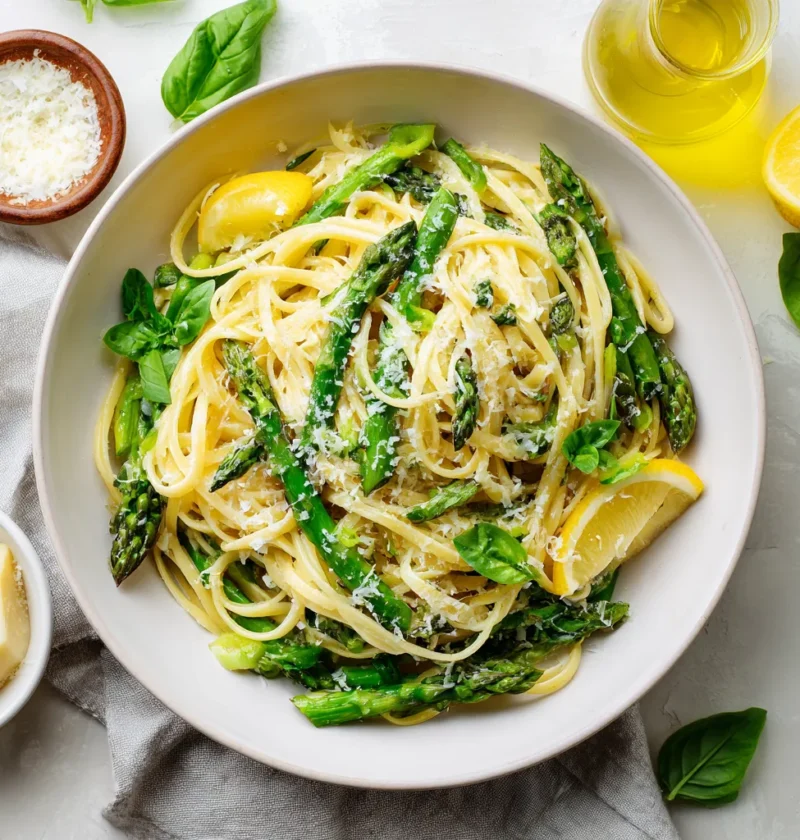
Spring has a flavor, and it tastes like this. Pasta al limone with asparagus is one of those Italian spring pasta recipes that stops you mid-bite, bright with citrus, silky with cream, and grounded by the grassy snap of fresh asparagus. It is the kind of dish that feels luxurious but comes together in under 30 minutes with a handful of ingredients.
This is not your average lemon asparagus pasta. The sauce builds directly in the pan using butter, heavy cream, sharp pecorino Romano, and a generous amount of lemon zest that perfumes every strand of spaghetti from the inside out. Starchy pasta water does the final emulsification work, creating a glossy, clinging sauce that no cream-only recipe can match.
Whether you are planning a light weeknight dinner or a spring pasta dinner to impress guests, this recipe delivers elegance without effort. Let’s get into it.
Why You’ll Love This Recipe
- Bright, citrus-forward flavor from both lemon zest and fresh lemon juice working together in the sauce
- Silky, velvety texture thanks to the emulsion of butter, cream, and reserved starchy pasta water
- Ready in 30 minutes start to finish, making it a flawless easy weeknight spring pasta dinner
- Vegetarian-friendly with no substitutions needed – satisfying and complete as written
- Crisp-tender asparagus that stays juicy and vibrant, never stringy or overcooked
- One pan sauce that comes together while the pasta cooks, keeping cleanup minimal
Ingredients
Pasta
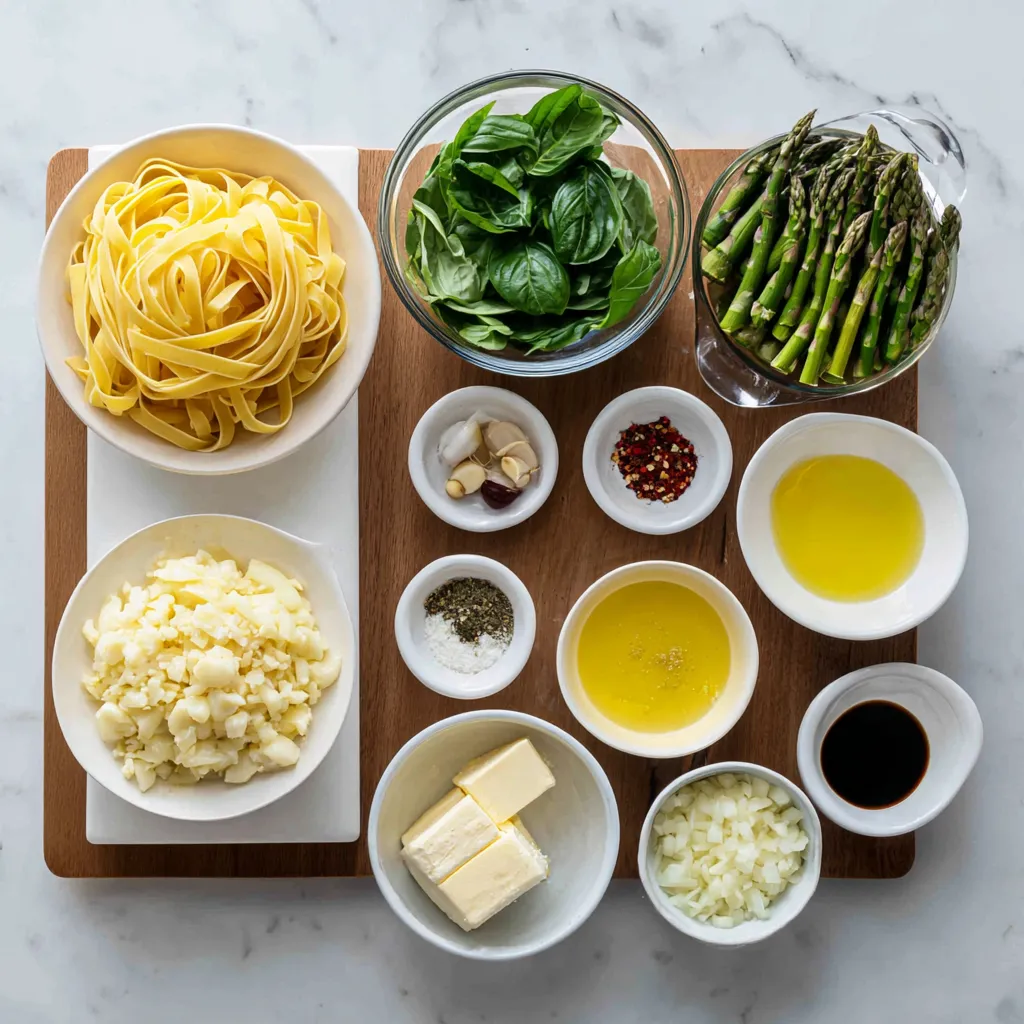
| Ingredient | Amount |
|---|---|
| Spaghetti or bucatini | 12 oz |
| Kosher salt (for pasta water) | 2 tablespoons |
Asparagus
| Ingredient | Amount |
|---|---|
| Fresh asparagus, woody ends trimmed | 1 lb |
| Extra virgin olive oil | 1 tablespoon |
| Garlic, thinly sliced | 3 cloves |
| Salt and black pepper | To taste |
Lemon Cream Sauce
| Ingredient | Amount |
|---|---|
| Unsalted butter | 3 tablespoons |
| Heavy cream | 3/4 cup |
| Lemon zest (fresh) | Zest of 2 lemons |
| Fresh lemon juice | 3 tablespoons |
| Pecorino Romano, finely grated | 3/4 cup |
| Red pepper flakes | 1/4 teaspoon |
| Reserved pasta water | 1/2 cup (or as needed) |
Garnish
| Ingredient | Amount |
|---|---|
| Fresh basil or flat-leaf parsley | Small handful |
| Extra pecorino Romano | For serving |
| Lemon zest | Extra pinch |
| Cracked black pepper | Generous amount |
How to Make It
1. Boil the pasta water (5 min)
Fill a large pot with water and bring to a rolling boil. Salt it generously – it should taste like mild sea water. This is your only chance to season the pasta from the inside. Add the spaghetti and cook until just al dente, usually 1-2 minutes shy of the package time. Before draining, scoop out at least 1 cup of pasta water and set it aside.
2. Prep and cook the asparagus (5-6 min)
While the pasta cooks, heat olive oil in a large wide skillet over medium-high heat. Add the sliced garlic and stir for 30 seconds until fragrant but not browned. Add the asparagus cut into 2-inch pieces, season with salt and pepper, and cook for 3-4 minutes until crisp-tender with slight color at the edges. Remove the asparagus from the pan and set aside on a plate.
Pro Tip: Pull the asparagus off the heat while it still has a slight bite. It will continue softening from residual heat and again when tossed with the hot pasta. Overcooked asparagus turns stringy and loses its bright green color.
3. Build the lemon cream sauce (4-5 min)
In the same skillet over medium heat, add the butter. Once melted and just beginning to foam, pour in the heavy cream. Add the lemon zest and red pepper flakes. Let the sauce simmer gently for 2-3 minutes, stirring occasionally, until it thickens enough to coat the back of a spoon. Stir in the lemon juice and remove from heat.
4. Emulsify with pasta water (2-3 min)
Add the drained spaghetti directly to the skillet with the sauce. Return to medium heat. Pour in 1/4 cup of reserved pasta water and toss vigorously using tongs. The starch from the water binds the butter and cream into a cohesive, glossy coating rather than a heavy pooled sauce. Add more pasta water a splash at a time until the sauce clings to every strand without sitting at the bottom.
Pro Tip: The vigorous tossing motion – not just stirring – is what creates emulsification. Think of it the way a Roman chef moves carbonara. Active movement builds the sauce.
5. Add the cheese and asparagus (1-2 min)
Remove the pan from heat. Add the grated pecorino Romano in two batches, tossing between each addition so it melts evenly without clumping. Fold the cooked asparagus back in gently. Taste and adjust salt, lemon, and pepper.
6. Plate and garnish
Twirl into deep bowls. Top with fresh basil or parsley, an extra pinch of lemon zest, a shower of additional pecorino, and several confident cracks of black pepper. Serve immediately.
Macros & Nutrition Table
Per serving (approximately 1.5 cups, recipe makes 4 servings)
| Nutrient | Amount |
|---|---|
| Calories | 510 kcal |
| Protein | 16g |
| Total Carbs | 58g |
| Net Carbs | 55g |
| Fat | 24g |
| Fiber | 3g |
| Sodium | 420mg |
Calculation Note: Macros were estimated using USDA FoodData Central values for dried spaghetti (cooked), fresh asparagus, heavy cream, butter, and pecorino Romano, divided equally across 4 servings. Values are approximate and will vary based on pasta brand, exact lemon juice amount, and the generosity of your cheese garnish.
Pro Tips & Variations
Tip 1 – Use a Microplane for zest: A Microplane grater produces fine, feathery lemon zest that melts seamlessly into the sauce. Coarsely zested lemon can be overpowering in texture and slightly bitter. Zest before you juice – always.
Tip 2 – Pasta shape matters: Long noodles like spaghetti, linguine, or bucatini work best for this creamy lemon pasta because the sauce wraps around them evenly. Short pasta works too – orecchiette, lumache, or shells catch pools of sauce inside their curves.
Tip 3 – Shave, don’t grate the asparagus optionally: For a more elegant Italian spring pasta presentation, use a vegetable peeler to shave thin ribbons from the raw asparagus stalks and fold them in raw at the end. They wilt gently from the heat of the pasta alone.
Tip 4 – Add protein: Stir in grilled shrimp, flaked poached salmon, or grilled chicken slices in the final toss. The bright lemon sauce pairs beautifully with all three without overpowering them.
Dietary Variation – Vegan: Replace butter with a good-quality vegan butter, swap heavy cream for full-fat coconut cream or oat cream, and use nutritional yeast in place of pecorino. Add a tablespoon of walnut pieces for texture and richness.
Dietary Variation – Gluten-Free: Use your preferred gluten-free spaghetti or linguine in a 1:1 swap. Note that gluten-free pasta releases less starch into the cooking water, so add an extra tablespoon of butter to help the sauce bind.
Serving Suggestions
- Crusty ciabatta or focaccia – For mopping up every last drop of the lemon butter sauce left at the bottom of the bowl. Non-negotiable.
- Simple arugula salad with shaved parmesan and olive oil – The peppery bitterness of arugula cuts through the cream and echoes the lemon in the pasta.
- A chilled glass of Pinot Grigio or Vermentino – The mineral, citrus-edged qualities of both wines mirror the brightness of the asparagus spaghetti lemon sauce and make the whole meal feel like a proper Italian spring dinner.
Storage & Reheating
Refrigerator: Store leftover pasta in an airtight container for up to 3 days. The sauce will thicken and absorb into the noodles overnight, which is actually not a bad thing for next-day leftovers.
Freezer: This creamy lemon pasta does not freeze well. The cream sauce separates and the asparagus loses its texture. Make it fresh for best results – it only takes 30 minutes anyway.
Reheating: Add the pasta to a skillet over medium-low heat with 2-3 tablespoons of water or broth. Toss gently as it heats, adding liquid until the sauce becomes creamy again. A small pat of butter stirred in at the end restores the gloss. Avoid the microwave if possible – it dries out the pasta and kills the sauce texture.
FAQ
Q: What is the difference between pasta al limone and regular lemon pasta?
A: Pasta al limone is a specific Italian preparation, rooted in southern Italian and Amalfi Coast cooking, where lemon zest and juice are emulsified directly into the sauce using pasta water, butter, and aged cheese. Regular lemon pasta often just means pasta tossed with lemon juice and olive oil after cooking. The Italian spring pasta recipe technique creates a significantly creamier, more unified sauce that coats rather than dresses the noodles.
Q: Can I use bottled lemon juice instead of fresh?
A: Fresh lemon juice is strongly recommended here. Bottled juice lacks the volatile aromatic oils that make this creamy lemon pasta so bright and fragrant. The zest is especially critical – it contains concentrated citrus oils that bottled juice cannot replicate. If fresh lemons are unavailable, the dish will still work but the signature floral brightness will be noticeably muted.
Q: How do I keep the asparagus from turning mushy in the pasta?
A: The key is cooking the asparagus separately in a hot pan for just 3-4 minutes until crisp-tender, then setting it aside. Fold it back into the pasta at the very end, off the heat, so it only warms through rather than continuing to cook. Asparagus that goes in too early or cooks in the sauce gets soft and loses its color.
Q: What cheese works best in pasta al limone with asparagus?
A: Finely grated Pecorino Romano is the traditional choice and adds a sharp, salty bite that balances the sweet lemon. Parmigiano Reggiano produces a milder, nuttier result. For the creamiest asparagus spaghetti lemon sauce, some cooks blend both in equal parts. Avoid pre-shredded cheeses at all costs – the anti-caking coatings prevent proper melting and turn the sauce grainy.
Q: Is pasta al limone the same as Olive Garden’s lemon pasta?
A: They share a similar spirit but the Italian original is lighter, more refined, and lemon-forward. Restaurant versions like Olive Garden’s tend to use heavier cream ratios and less lemon zest, making them richer but less bright. The homemade pasta al limone easy recipe version uses pasta water emulsification for a silkier finish that feels lighter on the palate despite the cream.
Your Turn
If you made this pasta al limone with asparagus, leave a comment below and tell me how it turned out. Did you go with spaghetti or try it with another shape? Add shrimp? Use pecorino or parmesan?
Save this to your spring pasta dinner ideas board on Pinterest so you can find it again when asparagus season hits. Sharing it with a friend who loves Italian food takes two seconds and genuinely means the world to this little food blog.
Up next: if this lemon asparagus pasta made you fall in love with spring pasta dinner ideas, wait until you see the pea and ricotta pasta with crispy pancetta. Same 30-minute window, same bright seasonal energy, and an even creamier sauce.