
Table of Contents
The Most Impressive Dessert You’ll Ever Make from 5 Ingredients
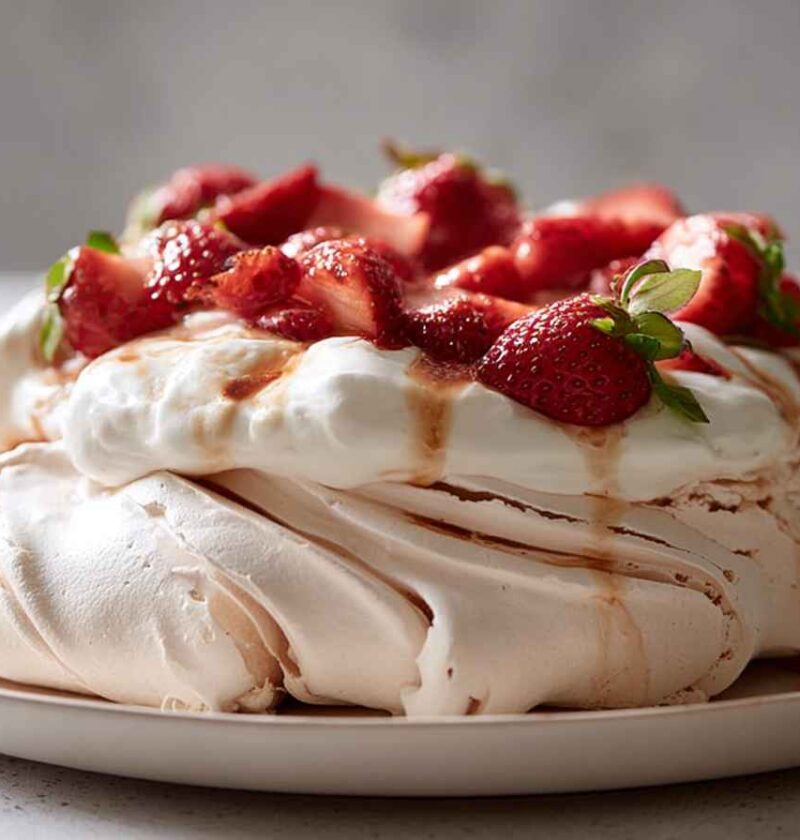
There are desserts that taste amazing, and then there are desserts that stop conversation the moment they hit the table. Strawberry pavlova is firmly in the second category. A cloud-like meringue base — shatteringly crisp on the outside, soft and marshmallow-tender at the center — piled high with billowy whipped cream and jewel-bright fresh strawberries that glisten like something out of a patisserie window. It looks wildly extravagant. It’s made from five humble ingredients.
This recipe is built for home bakers who want maximum visual impact with a process that’s far more forgiving than it looks. The meringue bakes low and slow, cools in the oven overnight, and waits patiently for you to crown it with cream and fruit right before serving. The result is that irresistible trifecta — sweet, tart, and textural — that makes pavlova one of the most beloved desserts in the world.
Whether you’re serving it at a summer dinner party, Easter brunch, holiday celebration, or simply because strawberries are at their peak and the moment demands something beautiful, this foolproof pavlova delivers every single time.
Why You’ll Love This Recipe
- Five core ingredients — egg whites, sugar, cornflour, vinegar, and cream: nothing fancy, nothing obscure
- Crispy shell, marshmallow center — the magic dual texture that makes every pavlova devotee weak at the knees
- Completely make-ahead — bake the meringue the night before and top it just before serving
- Naturally gluten-free — the entire base is flour-free with no substitutions needed
- Perfectly imperfect by design — rustic, cloud-like edges are the aesthetic, not a mistake
- Stunning at any scale — serve one dramatic large pavlova or individual nests for plated elegance
- Endlessly toppable — strawberries and cream is the classic, but the base welcomes any seasonal fruit
Ingredients
The Pavlova Meringue
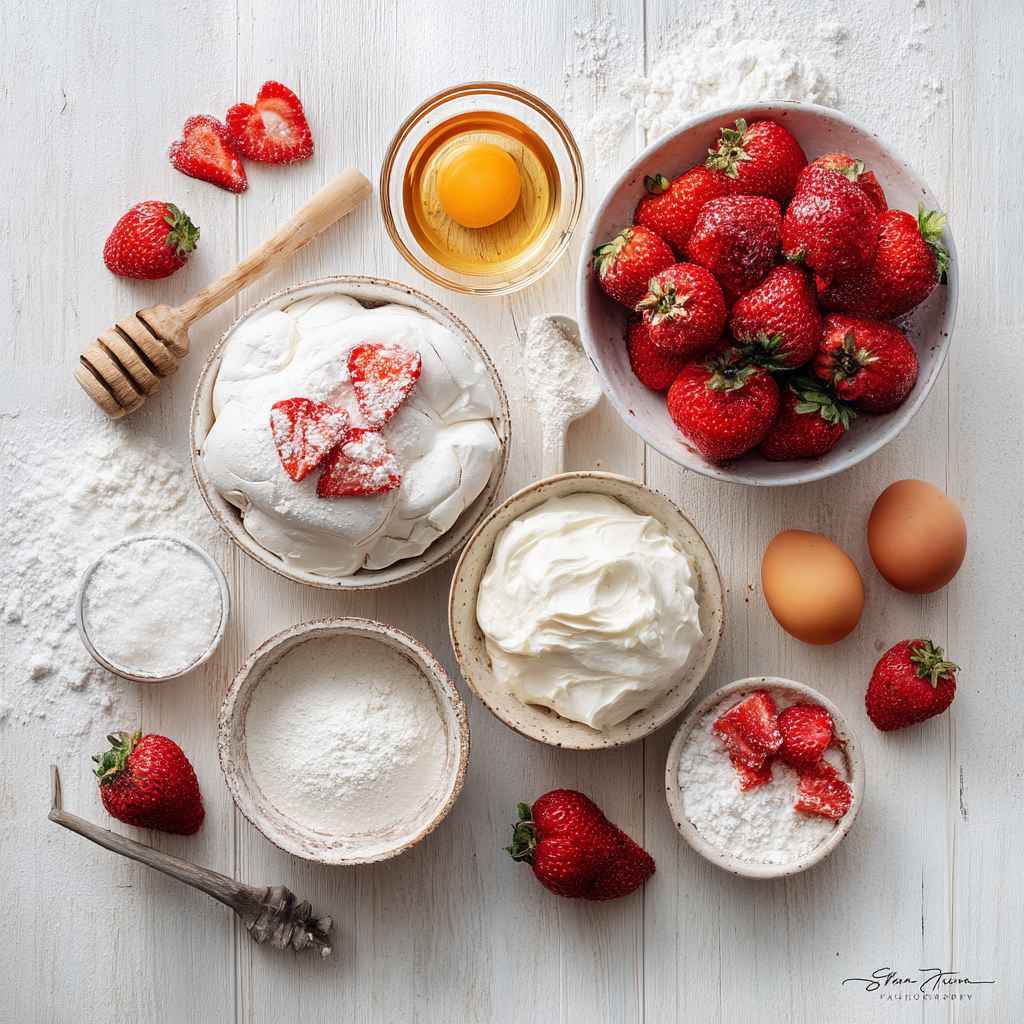
- 4 large egg whites (about 150g), completely at room temperature (cold eggs don’t whip to full volume — pull them from the fridge 1 hour before baking)
- 1 cup + 2 tbsp (225g) caster sugar (superfine/caster sugar dissolves faster and more completely than regular granulated — this is non-negotiable for a stable, glossy meringue)
- 1 tsp (5ml) white wine vinegar or white vinegar (adds stability and promotes the soft, chewy center)
- 2 tsp (6g) cornflour (cornstarch), sifted (thickens the interior and helps create that signature marshmallow core)
- 1 tsp (5ml) pure vanilla extract
The Whipped Cream Topping
- 1¼ cups (300ml) heavy whipping cream or double cream, kept ice-cold until the moment of whipping
- 2 tbsp (15g) powdered sugar, sifted
- 1 tsp (5ml) pure vanilla extract (optional: swap with vanilla bean paste for a speckled, elevated result)
The Strawberry Topping
- 14 oz (400g) fresh ripe strawberries, hulled and halved or quartered
- 1–2 tbsp (12–24g) caster sugar (for macerating — draws out the juices and creates a natural glossy sauce)
- 1 tsp fresh lemon juice (brightens the berry flavor and prevents oxidation)Egg White Note: Even a single drop of egg yolk will prevent your whites from whipping to full volume — the fat in yolk collapses the protein structure. Separate each egg into a small cup first, then add to the bowl, so a broken yolk doesn’t contaminate the whole batch. Your bowl and whisk must also be completely clean and grease-free; wipe both with a paper towel dipped in white vinegar before starting.
Step-by-Step Instructions
Preheat your oven to 350°F (180°C). Line a large, flat baking sheet with parchment paper. Using a 9-inch (23cm) round cake tin or plate, trace a circle on the parchment paper, then flip the paper over — you’ll see the circle through it as your guide without the pencil touching the meringue.
Wipe your stand mixer bowl and whisk attachment thoroughly with a paper towel dampened in white vinegar. Any trace of grease will prevent the egg whites from reaching stiff peaks — this step takes 30 seconds and guarantees your meringue succeeds.
Add the room-temperature egg whites to the clean bowl. Whisk on medium speed for 3–5 minutes until soft, cloud-like peaks form. The whites should look white and foamy with peaks that curl over at the tip when the whisk is lifted — not stiff or dry. [PRO TIP: Don’t rush to high speed immediately — building the foam slowly at medium speed creates smaller, tighter, more stable air bubbles that hold up through baking.]
With the mixer running on medium speed, add the caster sugar one tablespoon at a time, waiting 8–10 seconds between each addition. This patient, slow sugar addition is the most critical step in the recipe — it gives each spoonful time to begin dissolving before the next goes in, building a stable, glossy meringue rather than a gritty, collapsed one.
Once all the sugar is incorporated, increase to high speed and continue whisking for 8–10 minutes until the meringue is thick, very stiff, and brilliantly glossy. Rub a small amount between your fingertips — if you feel any sugar granules at all, keep beating for another 2 minutes. The meringue should feel completely smooth, like satin, and hold stiff, upright peaks. [PRO TIP: The meringue is ready when you can hold the bowl upside down over your head without it moving — seriously.]
Sift the cornflour over the meringue, add the vinegar and vanilla, and fold in with a large spatula using 3–4 gentle strokes. Don’t over-fold — just enough to incorporate. These three additions are what transform a regular meringue into a pavlova with that signature marshmallow core.
Mound the meringue onto the parchment circle in the center of your baking sheet. Using a large spoon or offset spatula, shape it into a round, building the sides slightly higher than the center to create a natural well that will hold the cream and fruit. Rustic, swooping edges are the aesthetic — don’t stress about perfection. [PRO TIP: Creating a slight indentation in the center now prevents it from cracking dramatically when it cools — the top will naturally sink a little, forming a perfect natural bowl for your toppings.]
Place the meringue in the oven, then immediately reduce the temperature to 250°F (120°C). This temperature drop creates the crispy exterior without over-drying the interior. Bake for 1 hour to 1 hour 15 minutes until the shell is crisp and dry to the touch and the meringue looks a very pale cream color — not white, not golden.
Turn the oven off completely. Do not open the oven door. Leave the pavlova inside the cooling oven for a minimum of 2 hours, or overnight. This slow, undisturbed cooling is what prevents the dreaded dramatic collapse — the meringue needs to contract gradually as the temperature drops. [PRO TIP: Making the meringue the evening before your event is the ideal approach — an overnight oven rest produces the most stable, beautifully structured pavlova shell.]
While the pavlova cools, macerate the strawberries. Toss the hulled, halved strawberries with 1–2 tablespoons of caster sugar and a teaspoon of lemon juice. Let them sit at room temperature for 30 minutes minimum — they’ll release their juices into a fragrant, glossy natural syrup that drizzles beautifully over the cream.
No more than 1 hour before serving, whip the cream. Using cold cream in a cold bowl, whisk the heavy cream, powdered sugar, and vanilla on medium-high speed until soft, billowy peaks form — it should look like a thick cloud, not stiff whipped cream. Stop before it looks stiff. [PRO TIP: Over-whipped cream looks grainy and heavy on a pavlova — soft, pillowy peaks are the goal. When in doubt, stop early and finish the last few strokes by hand with a whisk.]
Transfer the cooled pavlova base to a serving plate or cake stand. Gently spoon the whipped cream into the natural well on top, spreading it softly toward the edges without covering the sides entirely. Spoon the macerated strawberries over the cream generously, then drizzle the collected strawberry juices over everything.
Serve immediately once assembled. Pavlova waits for no one — the cream and fruit should go on as close to serving time as possible for the best textural contrast between the crispy shell and the soft, creamy top.
Macros & Nutrition
Per serving (based on 8 servings, meringue + whipped cream + strawberries):
| Nutrient | Amount |
|---|---|
| Calories | 285 kcal |
| Protein | 3g |
| Total Carbs | 38g |
| Net Carbs | 37g |
| Fat | 14g |
| Fiber | 1g |
| Sugar | 36g |
Note: Macros were calculated using 4 egg whites, 225g caster sugar, 300ml heavy cream, and 400g fresh strawberries, divided into 8 equal servings. Reducing the powdered sugar in the cream to 1 tablespoon saves approximately 10 kcal per serving. For precise tracking, input your specific brands into Cronometer or MyFitnessPal.
Expert Tips, Variations & Storage
3 Tips for a Flawless Pavlova Every Time
Humidity is the enemy of meringue — pick your baking day wisely. High-humidity days cause meringue to weep (sweat liquid droplets) and stay sticky rather than crisping up properly. On very humid days, extend the bake time by 15 minutes and leave the meringue in the oven for a full overnight rest. In Marrakesh’s dry climate, this is less of a concern — but rainy or overcast days warrant extra vigilance.
Add the sugar far more slowly than feels necessary. The most common pavlova failure is adding the sugar too quickly, which doesn’t give it enough time to dissolve into the egg whites. Undissolved sugar causes weeping, a gritty texture, and a meringue that collapses in the oven. One tablespoon every 8–10 seconds, with your mixer running the entire time, is the correct pace — it takes about 5 minutes for 225g of sugar, and every second is worth it.
Top the pavlova as close to serving time as possible. Once cream touches the meringue shell, it begins softening from the outside in. Assembled pavlova holds for about 1 hour before the shell loses its satisfying crunch — assemble it at the table if presentation matters, or in the kitchen no more than 30–45 minutes before guests sit down. The bare, cooled meringue shell keeps perfectly at room temperature for up to 24 hours.
3 Delicious Variations
Strawberry Coulis Version: Blend ½ cup (75g) of macerated strawberries with 1 tablespoon of lemon juice until smooth, then strain for a silky coulis. Drizzle dramatically over the whipped cream before adding the whole strawberries — it looks extraordinary and amplifies the strawberry flavor throughout every bite.
Mascarpone Chantilly Cream: Replace half the heavy cream with cold mascarpone cheese (125g each). Whip together with powdered sugar and vanilla until thick and billowy. The result is richer, more stable, and slightly tangier than plain whipped cream — it holds its shape longer on the pavlova and pairs beautifully with the sweet meringue.
Individual Pavlova Nests (Meal Prep / Party Version): Divide the meringue into 8–10 small nests using a large spoon and create individual wells in each one. Reduce bake time to 45–55 minutes. These individual pavlovas are perfect for dinner parties — plate them individually, top to order, and every guest gets their own pristine, perfectly crisp nest.
Storage & Reheating
- Bare meringue shell: Store at room temperature in an airtight container or under a large bowl for up to 2 days — keep away from any moisture or humidity
- Assembled pavlova: Best eaten within 1 hour of topping; the cream softens the shell progressively after assembly
- Leftover assembled pavlova: Refrigerate for up to 1 day — the shell loses its crunch but the flavor remains beautiful; serve it as a “Eton mess” by gently crushing the meringue into the cream and fruit
- Freezer: The bare meringue shell can be frozen, wrapped in plastic, for up to 1 month — thaw uncovered at room temperature for 1 hour before topping
FAQ — People Also Ask
Q: Why did my pavlova crack and collapse?
A: Some cracking and sinking is completely normal — the natural well that forms is actually part of the design. Dramatic collapse is usually caused by cooling too quickly (always cool in the oven with the door closed), opening the oven door during baking, or under-whipping the meringue before shaping. The vinegar and cornflour stabilize the structure, so never skip them. A little crack around the edges is a sign of a well-baked pavlova — not a failure.
Q: Can I make strawberry pavlova the day before?
A: The meringue base is best made the day before — it bakes and then cools overnight in the oven, producing a more stable, evenly dried shell than one cooled for only a couple of hours. Store the bare shell at room temperature in a dry spot. The strawberries can be macerated up to 4 hours ahead and refrigerated. Whip the cream and assemble no more than 1 hour before serving for maximum crunch.
Q: Why is my pavlova soft and sticky, not crispy?
A: A soft, sticky pavlova is almost always caused by humidity, undissolved sugar, or pulling it from the oven too early. Sugar that hasn’t fully dissolved into the egg whites draws moisture from the air after baking. Make sure you add the sugar slowly and always test by rubbing the meringue between your fingers — it must feel completely smooth with no grit. Extend the oven-cooling period to overnight if your climate is humid.
Q: What’s the difference between meringue and pavlova?
A: Both are made from whipped egg whites and sugar, but pavlova adds cornflour and an acid (vinegar or cream of tartar) to the mixture — these two additions prevent the interior from fully drying out during baking. The result is a meringue with a crispy exterior shell and a soft, chewy, marshmallow-like center that regular meringue doesn’t have. Pavlova is also typically baked at a lower temperature for longer to preserve that textural contrast.
Q: Can I use frozen strawberries for pavlova topping?
A: Fresh strawberries are strongly preferred — their texture, color, and flavor are significantly better than frozen for a raw topping. Frozen strawberries release too much liquid when thawed, which makes the whipped cream weep and the meringue soggy faster. If fresh aren’t available, use frozen strawberries to make a cooked strawberry coulis instead — cook them down with sugar and lemon juice until jammy, strain for smoothness, cool completely, and drizzle over fresh-whipped cream on the pavlova.
Crown It and Serve It
Strawberry pavlova is the kind of dessert that earns a round of applause when you carry it to the table — a gleaming, cloud-white meringue shell crowned with whipped cream and glistening strawberries that looks like it belongs in a magazine spread and tastes even better than it looks. Four egg whites and some patience is all it takes to create something genuinely unforgettable.
If you make this recipe, drop a comment below and tell me what fruit combination you used! Save it to your dessert and entertaining boards on Pinterest, and tag me in your photos — I’m always ready for a beautiful pavlova shot.
Strawberry Pavlova
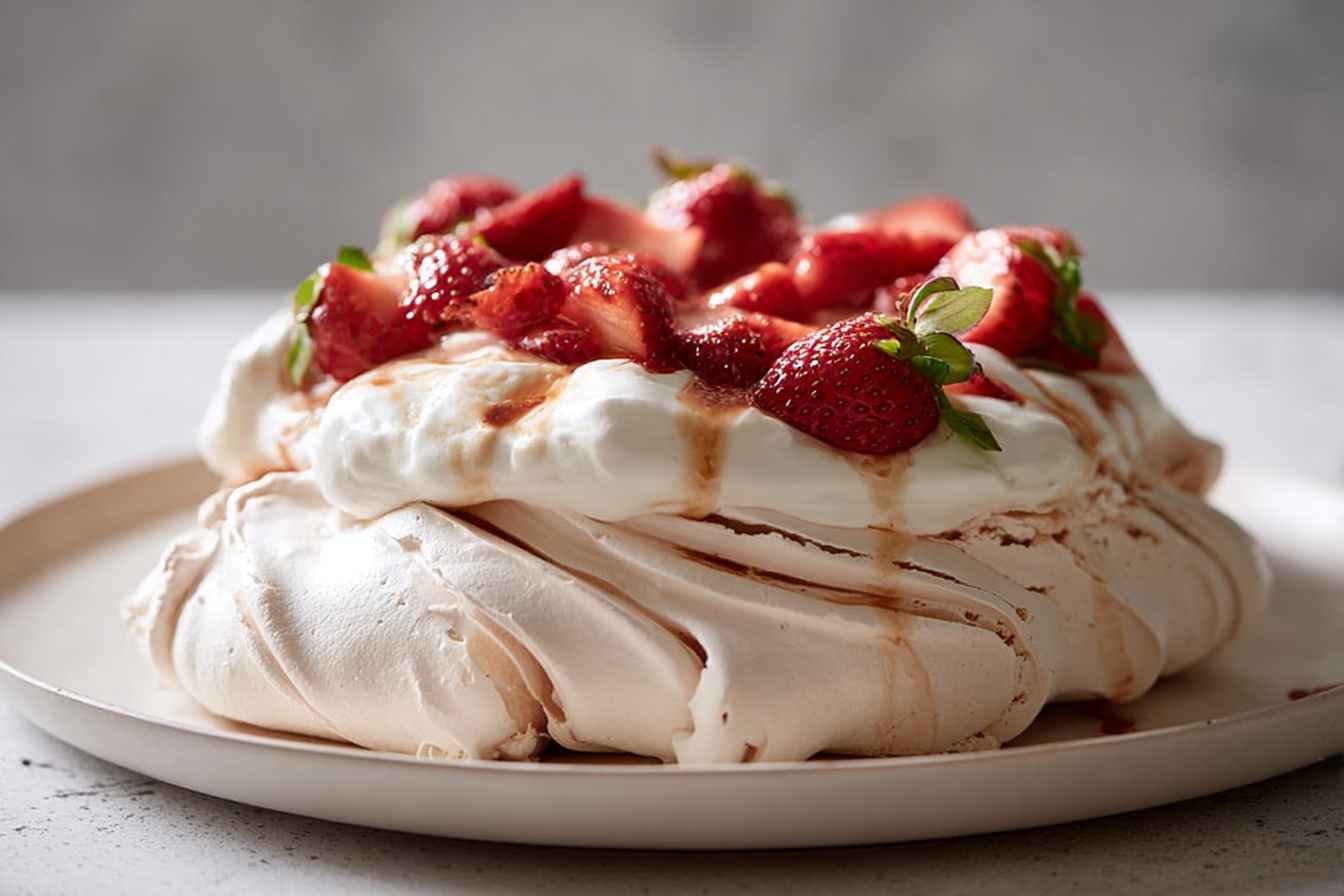
Strawberry Pavlova is a breathtaking dessert featuring a cloud-like meringue shell with a satisfyingly crisp exterior and a soft, marshmallow-like center, crowned with billowy whipped cream and juicy fresh strawberries. Elegant enough for any special occasion yet surprisingly simple to make, this timeless showstopper is a perfect balance of sweet, tart, and creamy in every bite.
Ingredients
- For the Meringue: 5 large egg whites, at room temperature
- 1¼ cups (250g) caster sugar (superfine sugar)
- 1 teaspoon white wine vinegar
- 2 teaspoons cornflour (cornstarch)
- 1 teaspoon pure vanilla extract
- For the Topping: 2½ cups (600ml) heavy whipping cream, cold
- 2 tablespoons icing sugar (powdered sugar)
- 400g (14oz) fresh strawberries, hulled and halved or sliced
- 2 tablespoons caster sugar (to macerate the strawberries)
Directions
-
Preheat the oven to 300°F (150°C). Line a large baking sheet with parchment paper and draw a 9-inch circle on the paper as a guide, then flip it over so the ink faces down.
-
Make sure your mixing bowl and whisk are completely clean and grease-free. Add the egg whites and whisk on medium-high speed until stiff, cloud-like peaks form, about 3–4 minutes.
-
With the mixer still running, add the caster sugar one tablespoon at a time, waiting about 10 seconds between each addition. Continue whisking until the meringue is thick, glossy, and very stiff — about 8–10 minutes total. The sugar should be fully dissolved; test by rubbing a small amount between your fingers — it should feel smooth, not gritty.
-
Mix the white wine vinegar and cornflour together, then gently fold into the meringue along with the vanilla extract using a large metal spoon.
-
Spoon the meringue onto the parchment within the circle. Use a spatula to shape it into a round, building the sides up slightly higher than the center to create a shallow well for the cream to nestle in.
-
Place in the oven and immediately reduce the temperature to 250°F (120°C). Bake for 1 hour and 15 minutes until the outside is crisp and lightly cream-colored. Do not open the oven door during baking.
-
Turn off the oven and leave the pavlova to cool completely inside with the door closed — at least 2 hours or overnight. This gradual cooling prevents cracking.
-
About 30 minutes before serving, toss the sliced strawberries with 2 tablespoons of caster sugar and set aside to macerate and release their juices.
-
Whip the cold heavy cream with icing sugar to soft, billowy peaks. Do not over-whip.
-
Just before serving, gently transfer the pavlova to a serving plate. Spoon the whipped cream into the center well, then pile the macerated strawberries on top. Drizzle any collected strawberry juices over everything and serve immediately.